
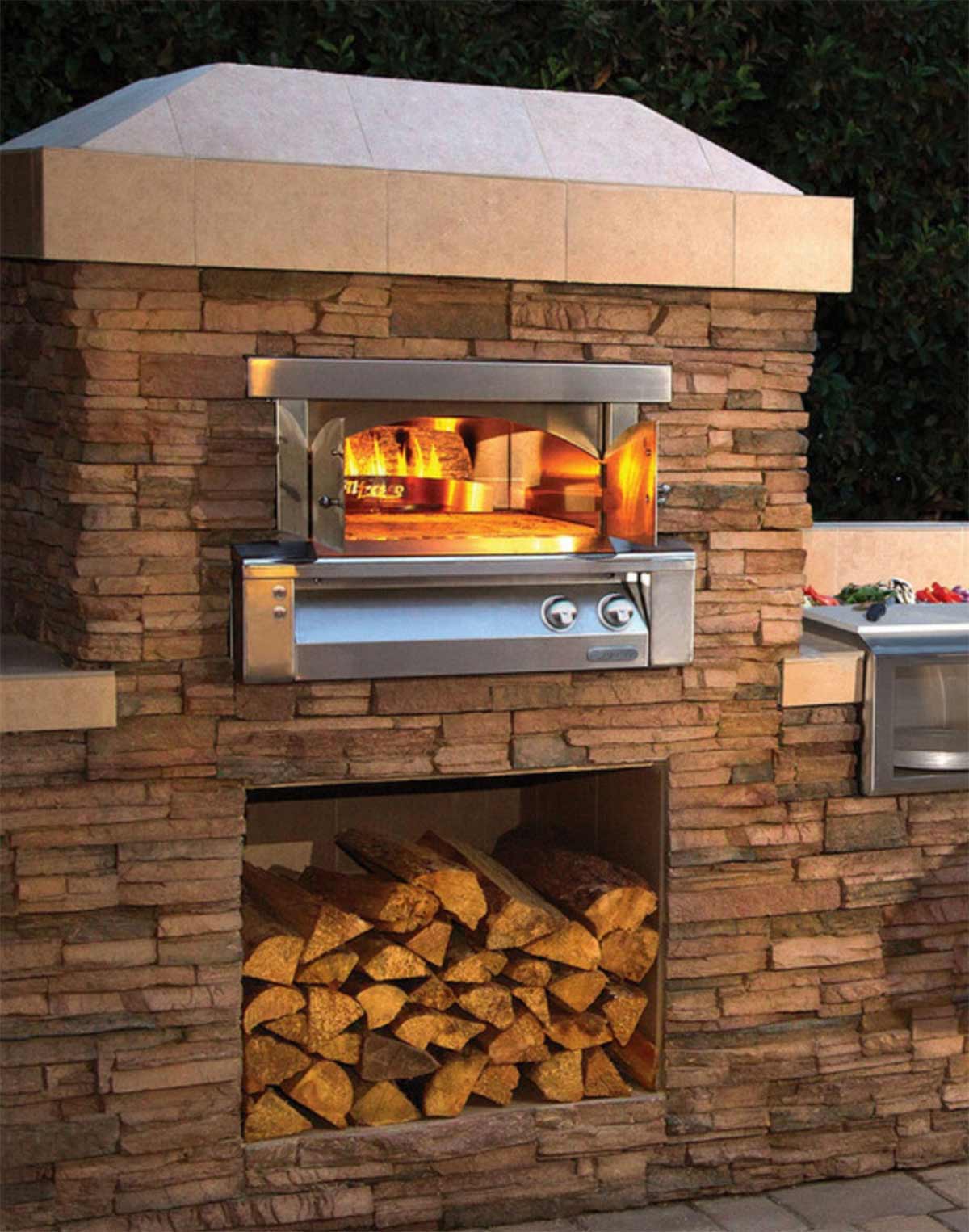
If you’ve been thinking about a wood-fired pizza oven for your property, you’re probably at the stage where you’ve watched a few YouTube videos, maybe got one quote that felt too cheap and one that felt too expensive, and now you’re trying to figure out what’s actually reasonable. We get that call a lot. At Abethu Builders, we’ve built pizza ovens for Durban homeowners, guesthouses in the KwaZulu-Natal Midlands, and everything in between — and the questions people ask are almost always the same.
So rather than a brochure, this is just an honest breakdown of how it all works. What it costs, what to watch out for, what separates a good build from a bad one. Our pizza oven and outdoor construction services are built around getting it right the first time, which — as you’ll see — matters more than most people realise going in.
What does it actually cost to hire pizza oven builders in South Africa?
Always the first question, and fair enough. The honest answer is that it depends quite a bit — but here’s a rough picture so you’re not going in blind.
A standard backyard pizza oven, built on a properly prepared base with quality firebrick and refractory mortar, starts somewhere around R8,000 to R15,000. That’s your no-frills, does-exactly-what-it-should build. The moment you start adding things — a tiled or plastered finish, an integrated braai section, a prep counter, a custom chimney, arched brickwork surrounds — you’re looking at R25,000 to R35,000 and sometimes more.
Commercial builds for lodges and restaurants, which we’ve done quite a bit of across the KZN Midlands, typically start at R30,000. Those projects have different requirements around output capacity, access, and finish standards, so the scope varies considerably.
What we’d say about pricing: the cheapest quote isn’t always the worst choice, but in this particular trade, it often is. A pizza oven that’s built with the wrong internal geometry won’t heat evenly — you’ll have hot spots on one side and barely warm patches on the other. One built with the wrong mortar or standard brick instead of refractory brick will crack within a year of regular use. We’ve been called in to fix ovens like this. It’s never cheap. Getting it done properly once is always the better option financially.
How long does a pizza oven build take from start to finish?
The actual construction — once materials are on site — is usually three to five working days for a residential build. That covers the base, the dome, the thermal mass layer, and the exterior finish.
What catches most people off guard is the curing process afterwards. You can’t just light a roaring fire in a brand new oven. The moisture trapped in the materials needs to come out slowly or you risk cracking the dome — and we’ve seen that happen when people skip this step. We take clients through a proper curing schedule: a series of small fires over seven to ten days, gradually building up the heat each time. It’s not complicated, but it does require patience in those first couple of weeks.
If your project is a full outdoor kitchen rather than just a standalone oven — which more and more Durban homeowners are going for, especially on the North Coast and in Umhlanga where outdoor entertaining space gets used hard — then you’re looking at two to three weeks in total depending on what’s involved. We’ll give you a realistic timeline before work starts. Not an optimistic one, a realistic one.
Which design is better — a dome oven or a barrel vault?
Most pizza oven builders work with one of these two layouts. They’re both proven. They just suit different uses.
The dome — rounded, low entry arch, cooking floor fully encircled by thermal mass — is what most people picture when they think pizza oven. Heat circulates the way it’s supposed to inside a dome. Once it’s up to temperature, which is usually somewhere around 400 to 450°C for proper pizza, it holds that heat for hours. You can knock out a dozen pizzas and still have enough retained heat to bake a loaf of bread afterwards without adding more wood. This is our most requested residential design by a significant margin.
The barrel vault is more elongated. It gives you a longer cooking surface, which matters if you’re regularly cooking for big groups or want to fit large roasting pans, a whole leg of lamb, or multiple dishes at once. Some of our hospitality clients prefer it for this reason — it’s also a bit more forgiving when you’re managing a fire during a busy service.
Our honest recommendation: if it’s primarily pizza with some occasional bread, the dome is the right call. If the oven is going to be the centrepiece of a serious outdoor cooking setup used for everything from slow roasts to whole fish, the barrel vault is worth a proper conversation.
What materials do proper pizza oven builders actually use inside the dome?
This is where shortcuts bite people later, and it’s not always obvious from the outside of a finished oven.
The interior dome must be built with refractory bricks — fire bricks that are rated to handle sustained extreme temperatures without the expansion and cracking you’d get from ordinary stock brick. The mortar between those bricks needs to be refractory mortar or a fire clay mix. Standard cement mortar fails. It doesn’t matter how neatly it’s applied; it will fail under repeated high heat cycles.
Over the firebrick dome goes a layer of thermal mass material — we typically use a perlite and cement mix or a castable refractory product depending on the project. This insulates the dome so heat stays where you want it instead of bleeding out through the shell. The outer finish over that can be almost anything you like: face brick, plaster, natural stone, Portuguese-style tiles, reclaimed brick to match existing structures on your property.
The cooking floor is its own consideration. Dense firebrick or purpose-made pizza floor tiles, properly set. This is the surface your food will actually sit on — it needs to be flat, uniform, and built to absorb and radiate heat correctly.
We don’t cut corners on internal materials. Even when clients ask about reducing costs, the refractory components aren’t where we look. A saving of R1,500 on interior materials isn’t worth rebuilding half the oven two years later — and that’s genuinely what happens.
Should the oven go against an existing wall or freestanding?
Both work well. The right answer depends on your space and what you want the oven to do in that space.
Against a wall — often built into a larger structure with a braai, countertop, and storage — is more space-efficient. It works particularly well on smaller suburban plots around Durban where the outdoor area needs to do a lot within a limited footprint. Everything is contained, it looks intentional, and you get a proper outdoor kitchen feel.
Freestanding on an island base suits larger properties where the oven is meant to be a feature in itself. Something guests gather around, where the fire and the cooking become part of the occasion rather than happening off to one side. We’ve built freestanding ovens in Hillcrest, Ballito, and throughout the Midlands that have genuinely become the centrepiece of the property’s outdoor space.
Practically: if the oven is going against an existing structure, we need to assess what it’s attaching to, check for heat transfer risks to any flammable materials, and think carefully about chimney placement — especially under or near a roof structure. These aren’t problems, they’re just details that need proper planning before work starts. Which is exactly why we do a site visit before we quote anything.
How do you actually tell if a pizza oven has been built right?
A well-built oven should reach proper pizza temperature — around 400°C at the dome — within 60 to 90 minutes of starting a fire with dry hardwood. If you’re sitting at two hours and still not there, something is wrong. Poor insulation, bad geometry, or unsuitable materials are the usual culprits.
The dome geometry matters more than most people realise. The entry arch height should be roughly 63% of the interior dome height. That ratio affects airflow, heat retention, and how smoke behaves inside the oven. Get it wrong and you’ll have a smoky, inefficient, uneven cook every time — and there’s no easy fix once it’s built.
After curing, the inner refractory dome should have no structural cracks. Hairline cracking in the outer render is completely normal — it’s just the thermal cycling causing minor surface movement — but anything cracking through the inner dome layer is a problem that needs attention.
When we finish a build, we do the first curing fires with the client there. We show you where to position the wood, how to read the fire, how to know when it’s at temperature, how to maintain the oven over time. Handing someone an oven without that practical knowledge feels wrong to us. The oven is only useful if you know how to use it properly.
Can you build a pizza oven alongside an outdoor kitchen that already exists?
Yes, and it’s actually a fair portion of our work. Plenty of clients have already built a patio cover, a braai, or a counter setup and want a pizza oven added in or alongside it. Integration work requires more precise planning than starting fresh, but there’s very little we haven’t been able to work with.
The main thing that needs checking before anything else is load capacity. A full pizza oven with base is heavy — 500kg on the conservative side, over a tonne for a larger build. If the existing slab or paving wasn’t designed for that kind of point load, we address that first. Building over an inadequate base is how you end up with a cracked structure within a few seasons.
We also do complete outdoor kitchen builds where the pizza oven is part of the original brief — integrated with prep counters, braai, under-counter storage, plumbing provisions, the lot. Those are some of our favourite projects to work on because everything can be designed to work together from the start. It ends up feeling cohesive in a way that phased builds don’t always achieve.
What’s the real difference between experienced pizza oven builders and a general builder?
We’ll be straight about this because it comes up often. A general builder who’s competent with brickwork can lay bricks. But pizza oven construction involves specific knowledge — thermal dynamics, refractory materials, dome ratios, curing — that sits well outside standard building practice.
We’ve been called in to assess ovens put up by capable, well-meaning general builders who simply didn’t have this background. The problems are almost always the same: wrong mortar, not enough insulation, incorrect dome proportions, bases that weren’t built for the load. None of these things are obvious until the oven is in regular use and starts showing cracks or performing badly.
Our team has specific experience with refractory construction. We understand what these structures go through under repeated high-heat cycles and we build for that from the ground up. It costs more than a general handyman. The oven will still be working properly in twenty years. That trade-off is usually pretty clear once people have seen a failed build or two.
Do you need council approval for a pizza oven in South Africa?
For most residential properties, a backyard pizza oven falls under minor building works and doesn’t need formal council sign-off. In eThekwini Municipality, structures under certain size and height thresholds generally don’t require plan submission. That said, it’s always worth a quick check — rules vary between municipalities, and if you’re in a complex or sectional title property, your body corporate may have its own requirements.
Where it gets more involved is when the oven is part of a larger structure. A covered patio, an entertainment room, any permanent roofed addition — those typically do require building plans even if the oven itself wouldn’t. In those cases, the plans are for the structure, not just the oven.
Commercial clients — lodges, restaurants, event venues — face additional requirements around ventilation, fire safety, and health compliance. These vary by province and by the nature of the operation. We’ve worked through these requirements for clients in KwaZulu-Natal and can point you in the right direction based on your specific situation.
Why do homeowners across KwaZulu-Natal trust Abethu Builders with their pizza oven projects?
Honestly? Because we pitch up when we say we will, we build things properly, and we don’t disappear halfway through a job. That sounds like a low bar, but based on what clients tell us before they hire us, it apparently isn’t.
We’ve built pizza ovens on suburban Durban properties, on smallholdings in the Midlands, on North Coast homes where the outdoor space gets used nearly every weekend. Each one is a bit different. But the common thread is that the people who have these ovens built end up using them constantly — they become the reason people come over, the thing the kids grow up remembering, the feature that makes the property feel like a home worth spending time in.
That matters to us. It’s not a wall or a retaining structure. It’s something you’ll actually gather around.
If you’re thinking about a build — whether it’s just the oven or a full outdoor kitchen and entertainment area — get in touch with the Abethu Builders team for a site visit and a proper quote. No obligation, no pressure. We work across Durban, the North Coast, the Midlands, and surrounding areas. Reach us through our contact page or give us a call to get the ball rolling.
Abethu Builders — Built right, built to last.