
Getting paving quotes in Durban is an experience in itself. One guy arrives an hour late, squints at your driveway, and gives you a number off the top of his head. The next one sends a WhatsApp voice note with no written breakdown. And the prices? Wildly different, often with no explanation for why. It’s genuinely hard to know who you’re dealing with.
That’s the reality of this market. And if you’ve already been through a round of quotes, you’ll know what we mean. This post is meant to give you a clearer picture of what good paving work actually looks like — what to insist on, what should raise a flag, and why Durban’s specific conditions matter more than most contractors will bother to tell you. Abethu Builders has been doing this work since 2010, and what follows draws on that experience directly.
Durban’s Climate Does Paving No Favours — If the Sub-Base Is Wrong
Most South African cities get away with mediocre sub-base preparation most of the time. Durban doesn’t. The heat is one thing, but it’s the combination of summer downpours, humidity, and the coastal soil conditions in KZN that really test a paved surface. Water that sits beneath the surface — even small amounts — causes movement. And movement means cracking, lifting, and that familiar white salt residue that creeps up between bricks after a wet season.
The soil is another factor that doesn’t get enough attention. Expansive clay soils are common in parts of the greater Durban area. They swell when wet, contract when dry, and that constant shifting puts stress on the layer above. A sub-base that wasn’t designed with this in mind will fail. Not maybe. Will.
None of this should put you off paving your property. It just means the prep work matters — a lot — and a contractor who doesn’t ask about your soil type or drainage situation before quoting probably isn’t thinking deeply enough about your specific site.
The Projects Most Durban Homeowners and Businesses Are Getting Done
Before you can properly assess a contractor, it helps to know whether they have relevant experience for your type of job. There’s a big difference between someone who lays garden pathways and someone who handles commercial parking bays. Here’s a quick run-through of what’s most common.
Driveways
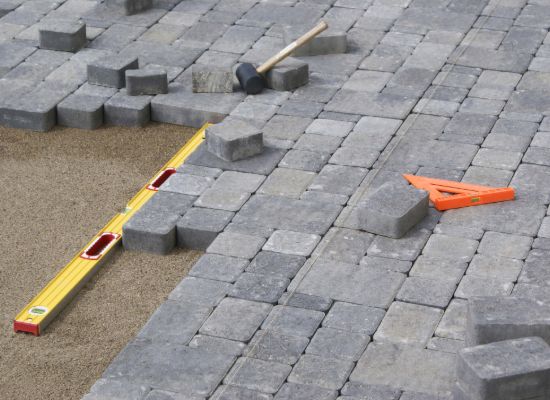
This is the bread and butter of residential paving in Durban. Clay brick and concrete block paving are both popular here — they handle vehicle weight well, and if a unit cracks or sinks you can lift and replace it rather than resurfacing the whole thing. The boring but critical stuff: edge restraints, drainage fall, and compaction. Get those wrong and it doesn’t matter how neatly the bricks are laid.
Patios and Entertainment Areas
Outdoor living is serious business in Durban, and the patio is often the most-used part of the home. Natural stone — slate, sandstone, granite — is popular here because it holds up to furniture, foot traffic, and the odd braai spillage without looking tired after two seasons. The drainage slope is just as important as the material. A patio that funnels water toward the house is a problem that gets worse every wet season.
Garden Pathways
Lower stakes, but still worth doing properly. Loosely bedded pathway paving becomes a trip hazard faster than you’d think, especially after Durban’s summer rains work on a soft base. Proper compaction and a consistent sand bed matter even for a simple garden path.
Commercial and Industrial Paving
Parking areas, loading zones, commercial forecourts — these carry entirely different loads to a residential driveway, and the sub-base specs need to reflect that. If you’re looking at a commercial paving project, you need someone who’s done it before and understands the heavier requirements. Abethu Builders works across both residential and commercial, which matters when a project doesn’t fit neatly into one category.
The Sub-Base: Where Cheap Paving Jobs Actually Fall Apart
You don’t need to become a builder to understand this — but knowing the basics will help you tell the difference between a contractor who’s cutting corners and one who isn’t.
Beneath your paving bricks is a layer of bedding sand, and beneath that is the sub-base — usually compacted crusher run or G5 material. For a domestic driveway you’re typically looking at 100–150mm of compacted sub-base. For foot-traffic-only areas a bit less, but not nothing. For commercial, more.
The sub-base exists to distribute load and prevent movement. When it’s skimped on — either by using too little material or skipping proper compaction — the sand bed above it shifts, and the bricks follow. Some contractors use a thick sand bed to compensate for an uneven or shallow sub-base. That’s a red flag. Sand should be a consistent 25–30mm. It’s not there to level an uneven base; that’s what the sub-base is for.
In areas with clay soil or poor drainage, a geotextile fabric between the subgrade and the sub-base can make a real difference over time. It stops fine soil particles from migrating up through the layers and undermining stability. Not every site needs it. But a contractor who’s aware of it and can advise you either way knows what they’re doing.
Ask any contractor you’re considering: how are you preparing the sub-base, and what depth are you specifying? If they can’t give you a clear answer, that tells you something.
Choosing a Paving Material That Actually Makes Sense for Your Project
There’s no universal right answer on materials. It depends on what the surface will be used for, your budget, and what you want it to look like in five years. What follows is a practical breakdown, not a sales pitch.
Clay brick paving is fired at high temperature, which makes it denser and far less porous than its concrete equivalent. It absorbs less water, holds its colour better, and generally weathers more gracefully over time. It costs more upfront. In Durban’s climate, it tends to justify that cost — particularly for driveways and areas that take real punishment.
Concrete block paving is more affordable and widely available from local suppliers. Quality varies quite a bit between manufacturers, and that variation really shows up in a wet climate. The density and water absorption rating of the block matters more than the price per unit. A low-density concrete paver in Durban’s conditions will start showing surface wear within a few years. Always ask about the spec, not just the price.
Natural stone — slate, granite, quartzite, sandstone — brings something different aesthetically and performs well in the right applications. It’s heavier to work with and more demanding to lay correctly, which means labour costs more. For a feature patio or an entrance area where appearance matters, it’s often worth it. For a utilitarian parking bay, probably not.
Exposed aggregate concrete suits larger surfaces where a uniform finish is fine — parking areas, commercial forecourts. It doesn’t offer the same repairability as block paving. A crack in exposed aggregate means patching, not replacing a few units. Worth knowing before you commit.
A contractor worth their salt should be able to recommend a material based on your actual application — not just whatever they happen to have on a truck or prefer to work with.
Ask These Questions Before You Agree to Anything
You don’t need to test every contractor like they’re applying for a job. But a few direct questions will quickly tell you whether someone knows what they’re doing or whether they’re going to be a problem.
- How are you preparing the sub-base, and what depth are you specifying for this site?
- What material are you recommending, and why is it suited to this specific application?
- How does drainage work on this site — where does the water go?
- Is your quote written, itemised, and VAT-inclusive?
- What happens if the paving shifts or settles within the first year?
- Can you show me similar work you’ve done nearby, or give me a reference?
None of those are trick questions. They’re basics. A contractor who gets cagey or vague when you ask about drainage or sub-base depth is giving you information — just not the kind they intend to.
Why Clients Keep Coming Back to Abethu Builders
The Durban building and paving market has no shortage of people willing to take your money. What’s harder to find is a contractor who’ll still be reachable after the job is done. Abethu Builders has been operating in this market since 2010 — long enough to have a real track record, and long enough that their work has been tested through multiple wet seasons and shifting soils.
A few things stand out consistently.
They handle more than just paving. Paving rarely exists in isolation. It connects to drainage design, kerbing, retaining walls, and — often — some kind of covered outdoor structure. When your paving contractor can’t speak to any of that, you end up coordinating multiple subcontractors yourself and carrying all the accountability when things don’t line up. Abethu Builders covers the full scope of building work, which keeps things cleaner and means there’s one party responsible for the outcome.
The sub-base work is done to spec. This is where most dodgy jobs cut corners because clients can’t see it once the bricks go down. Abethu Builders specifies depth and material based on the actual site — what the soil is doing, what load the surface will carry, what the drainage situation looks like. That’s how it should work.
Quotes are written and itemised. No voice notes, no handshake agreements. A written quote that separates out material costs, labour, sub-base preparation, and VAT is the minimum you should expect from any professional contractor. You get that from Abethu Builders.
Roofing and building work sits under the same roof. If you’re extending an entertainment area and need a roofing contractor in Durban to cover the paved space, that work is available through the same team. Less coordination, less friction.
What Paving Actually Costs in Durban — And Where People Get Caught Out
Giving you a meaningful per-square-metre rate without knowing your site is something we won’t do, because it’s genuinely not that useful. What is useful is understanding where the hidden costs live and why the cheapest quote almost never ends up being the cheapest job.
Sub-base shortcuts are the biggest one. A contractor who thins out the base material to save costs, or skips proper compaction, is handing you a future relaying bill. Fixing paving that’s shifted within two years — lifting it, redoing the base, relaying — will cost you significantly more than the difference between their quote and a more careful one.
VAT is the other common trap. Some contractors quote ex-VAT, which makes their number look more attractive on paper. Make sure you’re comparing apples to apples. A quote that includes materials, labour, sub-base prep, sand, edge restraints, and site cleanup is a complete quote. A quote that only covers laying costs is not.
Abethu Builders provides written, itemised quotes that spell out exactly what’s included. That makes comparison straightforward and removes the unpleasant surprises that tend to show up after work starts.
Keeping Your Paving in Good Shape After the Job Is Done
Good paving doesn’t demand much. But a bit of maintenance goes a long way, and ignoring a small issue early usually makes it an expensive issue later.
Jointing sand washes out over time. As it does, individual paving units lose lateral support and start to move. Sweeping kiln-dried jointing sand back into the joints every couple of years is usually enough to keep things stable. If you’re in an area that takes heavy rain, polymeric jointing sand sets harder and holds up much better between maintenance cycles.
Weeds in the joints are mostly a cosmetic annoyance, not a structural problem — unless you let them go long enough for roots to start widening the gaps. A pre-emergent herbicide in spring keeps them under control. Pull them when they’re small and the joints stay tight.
One of the underrated benefits of block paving is repairability. If a single unit cracks or a small area settles, you lift those units, fix the base beneath, and relay them. You don’t resurface the whole thing. Keep a handful of spare units from the original batch if you can — matching colour and texture from a newer production run isn’t always straightforward, and the difference shows.
For commercial paving, a quick visual inspection of high-traffic areas every few months is worth doing. Early movement is cheap to fix. Movement you ignore for a year is a bigger job.
Frequently Asked Questions
How long does a paving job take in Durban?
For a standard residential driveway — roughly 60 to 80 square metres — you’re looking at two to three working days once materials are on site. That assumes no major complications with the sub-base or drainage. Larger areas, difficult access, or sites that need significant excavation will push that out. Your contractor should give you a realistic timeline as part of the written quote, not a vague estimate on the day they start.
Clay brick or concrete block — which is better for Durban?
Both work when installed properly. Clay brick is denser, absorbs less moisture, and holds its surface integrity better over many years in a humid, high-rainfall environment like Durban. Concrete block is more affordable and fine for many applications when you specify a decent quality product. The honest answer is that clay brick tends to age better in KZN’s conditions, but if budget is a constraint, properly specified concrete block paving installed on a good sub-base will serve you well.
Do I need permission to pave my driveway in Durban?
In most cases, no. Standard residential driveway paving doesn’t require planning permission. But if your project involves changes to stormwater drainage, alterations within building lines, or you’re in a complex with body corporate rules, there may be requirements to check first. A reputable contractor will flag any permit considerations before work starts rather than leaving you to find out afterwards.
When can I drive on newly laid paving?
For pedestrian areas, you can walk on it once the jointing sand is in — usually the same day or the day after completion. For driveways, give it 24 to 48 hours before putting vehicle weight on it. The bedding sand needs time to settle properly under load, and getting impatient at this stage is one of those things that seems minor and isn’t.
Does Abethu Builders take on commercial paving work in Durban?
Yes. Abethu Builders handles commercial paving across Durban and surrounding areas — parking areas, loading zones, entrance forecourts, and more. Commercial work requires heavier sub-base specifications and materials suited to vehicle loads, and the team has experience on both the residential and commercial sides. If you’ve got a commercial project, contact Abethu Builders directly for a written quote.
Get a Proper Quote — Not a Guess
You’ve done the groundwork. You know what questions to ask, what to watch for in a quote, and why Durban’s conditions make the prep work matter. The next step is talking to someone who can walk your site, look at your soil and drainage, and give you a written number that actually means something.
Visit Abethu Builders to get in touch. And if your project also involves building work or a covered outdoor structure, check out their building contractor services and roofing services while you’re there. One team, one point of contact.