
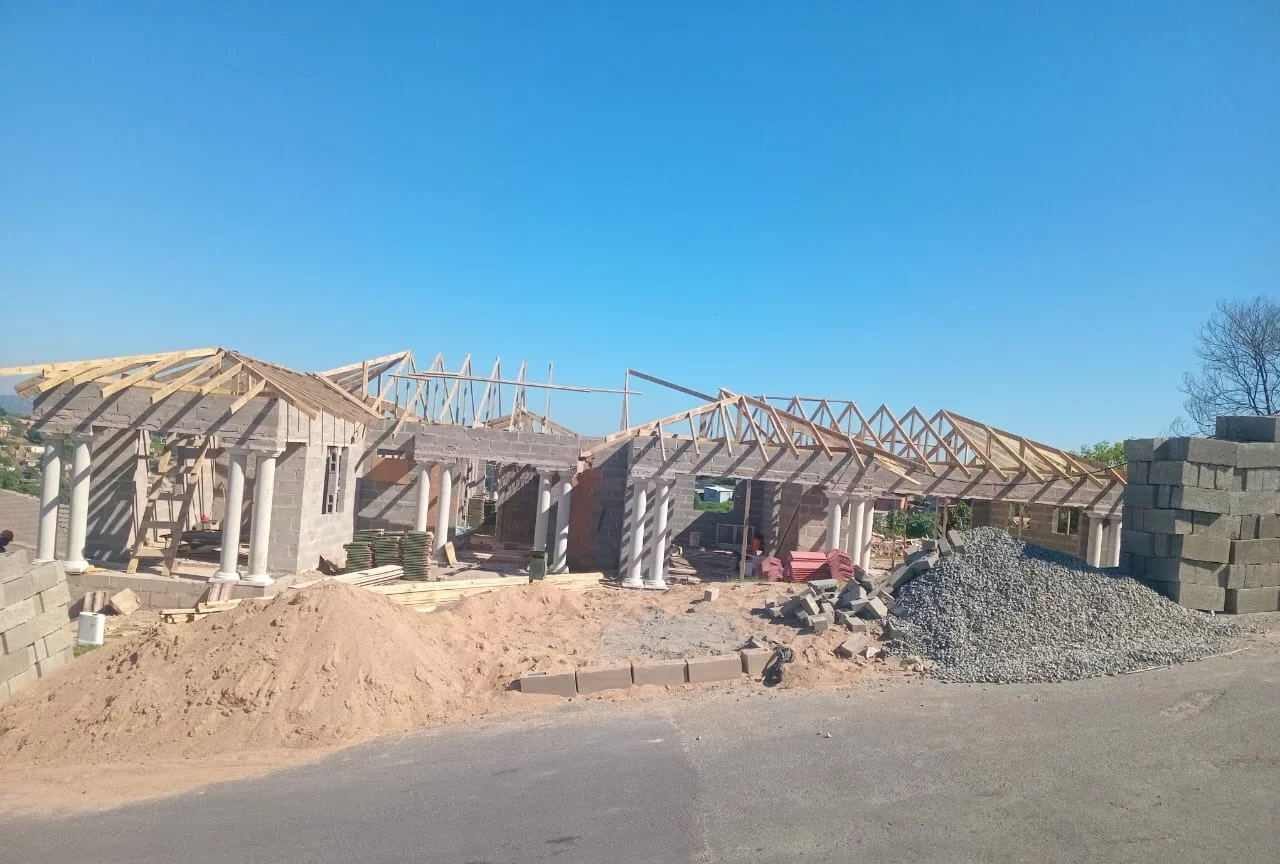
Durban’s climate doesn’t treat roofs kindly. The humidity alone is enough to accelerate corrosion on metal sheeting, but add in the coastal salt air, the UV intensity, and summer thunderstorms that arrive like they mean business — and you start to understand why so many Durban property owners end up dealing with roof problems sooner than they’d expected.
This isn’t meant to alarm you. It’s just the reality of owning property in KwaZulu-Natal, and once you understand it, you’re better placed to make sensible decisions about maintenance, repairs, and when a more serious intervention is actually necessary.
What this guide covers is practical. Who to look for, what to ask, what the common failure points are in Durban specifically, and why Abethu Builders — operating here since 2010 — remains a go-to roofing contractor in Durban for both homeowners and commercial clients.
The Climate Factor: Why Durban Roofs Age Differently
If you’ve spent time comparing notes with friends or family in Joburg or Cape Town, you’ll know that roofing problems here hit differently. Joburg has hail and dramatic temperature swings. Cape Town deals with wind-driven rain. Durban has its own set of issues, and they’re worth knowing.
Salt-laden air accelerates corrosion on metal roofing — IBR, corrugated, Chromadek. If your property is within a few kilometres of the beachfront, annual checks on any metal components aren’t excessive; they’re just sensible maintenance. Concrete and clay tiles expand and contract with the heat, and over time that movement works the mortar bedding loose at ridges and hips. Flat and low-pitch commercial roofs collect debris that blocks drainage outlets, leading to ponding water that quietly destroys waterproofing membranes.
None of this is catastrophic on its own. But it does mean that a roofing contractor in Durban worth their salt needs to understand these specific conditions — not just apply the same approach they’d use anywhere else in South Africa.
Repairs, Replacements, and New Roofs — What’s the Actual Difference?
These three options get confused all the time, and the confusion usually costs property owners money — either because they spent on a full replacement when a repair would have done, or because they patched something that needed replacing and ended up paying twice.
A repair is appropriate when the underlying structure is sound and the problem is genuinely localised. A cracked tile, a lifted section of flashing, a valley that’s leaking at one specific point. Done properly, a repair is a real fix — not a postponement. But it has to be honest. A good contractor will tell you if what looks like a small repair is actually masking something bigger.
A replacement removes the roof covering and replaces it entirely, usually keeping the structure if it’s still sound. You’d typically go this route when materials are at or near end-of-life — tiles that have become brittle, widespread cracking, metal sheeting that’s been patched so many times it’s more patch than original. At some point, continued spot repairs stop making financial sense.
New installations cover either new builds or situations where both the covering and the structural elements need to be built from scratch. This involves a bit more planning — roof pitch, drainage design, material selection, load calculations on commercial builds. It’s a different scope entirely from repair work. Abethu Builders handles all three, which matters when the honest answer to your problem is something other than what’s cheapest to recommend.
What to Look For When Choosing a Roofing Contractor in Durban
After any major storm, the number of roofing contractors advertising in Durban spikes dramatically. Some are legitimate. Others are here for the short-term opportunity and won’t be around when something fails three months later. Knowing how to tell the difference matters.
Longevity is the simplest filter. A company that’s been operating in Durban for more than a decade has done enough work to have a real track record — and has stayed in business long enough to be held accountable for it. Abethu Builders has been working in this city since 2010. That’s not a marketing claim; it’s just a verifiable fact that tells you something about continuity.
Material transparency is the next thing to check. The quality of what goes onto your roof directly affects how long it lasts. If a quote comes in well below others, it’s usually because something is being cut on materials. Ask specifically what’s being used and why. A contractor who can answer that clearly is worth listening to.
Don’t overlook the waterproofing detail. The tiles or sheeting are the obvious part, but many Durban roof leaks trace back to the junctions — where the roof meets a parapet wall, around a skylight, at a chimney, near an air conditioner unit. The flashing and waterproofing at these points degrade faster than the main roof covering, and they’re often skipped or done quickly on jobs where the contractor is cutting corners.
And insist on a written scope of work before anything starts. What is being done, what materials are being used, what the price covers. That document protects you if something goes wrong, and it protects the contractor too. Anyone unwilling to provide one is worth being cautious about.
Residential and Commercial Roofing — It’s Not the Same Job
Residential roofing in Durban is mostly tiled — concrete or clay — with IBR and corrugated sheeting common on outbuildings, flat-roof extensions, and older properties. The work is largely manual and follows a well-established process. Most homeowners dealing with a repair or replacement are working within a reasonably predictable scope.
Commercial roofing is a different matter. Larger spans, flat or near-flat profiles, specific waterproofing system requirements, potential fire ratings, insulation considerations, structural load assessments before anything goes up or comes down. If you’re managing a commercial property in Durban and your roof needs attention, you want a contractor who’s actually done this kind of work at scale — not one adapting domestic experience to fit a bigger building.
Abethu Builders works across residential and commercial projects in Durban. Their broader construction experience — including structural repairs and building work — means that when roofing work turns up something unexpected underneath, they’re not out of their depth.
The Roofing Problems Durban Contractors See Most Often
Flashing failures. This is probably the most common source of roof leaks in Durban, and it’s one of the most misdiagnosed. Homeowners see water coming in near a wall and assume it’s the tiles. It’s often the flashing at the junction that’s cracked or pulled away. The sealant used at these points has a finite lifespan — shorter in coastal conditions — and it’s not always obvious until there’s water damage already.
Broken or missing tiles after storms. The north and south suburbs take a beating during the summer storm season. Even one dislodged tile creates an entry point that can let in far more water than you’d expect. It spreads under adjacent tiles, hits the sarking or decking below, and by the time you see a ceiling stain, it’s been happening for a while.
Ridge and hip mortar cracking. Older tiled roofs across Durban — especially those from the 1980s and 90s — are at the stage where the mortar bedding on ridges and hips has outlived its useful life. It cracks, the tiles shift, and water gets in at the top of the roof where it can spread in every direction. This is often repairable, but it needs to be caught before a full replacement becomes the only option.
Ponding on commercial flat roofs. Blocked outlets, insufficient falls, or membrane damage can all lead to standing water on flat commercial roofs in Durban. It adds structural load, accelerates membrane wear, and eventually finds its way through. Regular drain clearing and annual membrane inspections prevent most of it.
Metal corrosion. If your property is coastal and you have IBR or corrugated sheeting, you probably already know about this. Salt air gets into small scratches or cut edges and works its way outward. Annual inspection and prompt touch-up treatment extends the life of a metal roof significantly.
Why Customers Use Abethu Builders for Roofing in Durban
The short answer is that Abethu Builders is a building contractor first, not just a roofing outfit. That distinction matters more than it might seem.
When a roof repair uncovers structural damage to the rafters, or when a replacement requires fascia board work or tie-in repairs to an external wall, you don’t want your roofing contractor looking slightly uncertain about what to do next. Abethu Builders’ background in residential and commercial building work across Durban means those adjacent problems get dealt with properly, not patched over.
Clients also mention the quoting process consistently. You get a clear, written breakdown of what the job involves, what materials are going on the roof, and what everything costs — before any work starts. No vague verbal estimates that expand once the job is underway. That kind of upfront clarity is, frankly, not as common as it should be in this industry.
Their knowledge of Durban’s specific conditions also shapes the recommendations they make. Material choices, scheduling around the storm season, detailing at flashings on coastal properties — these are things you only really learn from years of working in this environment, not from a product spec sheet. You can see the same approach carried through their paving work in Durban — consistent, properly executed, and built to last in conditions that test materials hard.
Questions Worth Asking Before You Sign Anything
You don’t need a long checklist. A few direct questions tell you most of what you need to know about a roofing contractor in Durban before you commit.
Do you carry public liability insurance? Don’t just take a yes for an answer — ask to see it. A contractor working on your roof without liability cover creates a problem for you if something goes wrong, and a legitimate operator won’t have any issue showing you the certificate.
What waterproofing method do you use at flashings and junctions? This is where many roofs fail. If the answer is vague, that’s worth noting. You want specifics.
Does the price include removal and disposal of the old roofing material? On a replacement job, this is a meaningful cost. Some contractors quote neatly and then present the disposal as an extra once work is underway.
What’s the workmanship warranty? The material warranty comes from the manufacturer. The workmanship warranty is the contractor’s responsibility — and the two are very different things. Nail down both before work starts.
Frequently Asked Questions
How much does a roofing contractor in Durban charge for a repair?
It depends entirely on the extent of the damage, the material involved, and how accessible the roof is. A small tile replacement or a localised flashing repair might be a few thousand rand. A repair that’s uncovered structural damage underneath will be a different figure entirely. The only way to get an accurate number is a proper site inspection and a written quote — anything else is guesswork.
How often should a Durban homeowner have their roof inspected?
Once a year is a reasonable baseline, ideally in spring before the summer storm season kicks in. If your property sits close to the coast, check your metal components more frequently. And after any significant storm, it’s worth getting eyes on the roof even if you haven’t noticed anything obvious inside the house.
How long does a tiled roof last in Durban?
A concrete or clay tiled roof that’s been properly installed and maintained can last 40 to 50 years. The tiles themselves often outlast the mortar bedding, ridges, and flashings around them — which is why a roof can look intact from the street while the waterproofing detail has been failing for years. Those secondary components need periodic attention regardless of how the tiles look.
Can Abethu Builders handle roofing work alongside other building work on the same project?
Yes. That’s actually one of the practical reasons clients come to them — handling roofing alongside structural repairs, extensions, or renovation work on the same project removes the coordination headache of managing multiple contractors on one site and one timeline.
How do I know if my roof needs replacing rather than repairing?
A qualified roofing contractor in Durban should give you an honest answer to this after a proper inspection. In general, replacement makes sense when materials are at end-of-life, when damage is widespread rather than isolated, or when you’ve been repairing the same sections repeatedly. If a contractor recommends a full replacement without explaining their reasoning clearly, get a second opinion.